Showing posts with label Ontario. Show all posts

Wednesday, April 29, 2009

All quiet on the Ontario pesticide ban

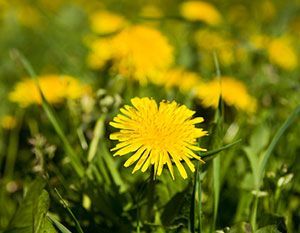
May is on deck, which means dandelion season will be in full swing.

In Ontario, traditional herbicides for killing dandelions, plus a host of other garden pesticides, have been banned for use and sale by the provincial government. There has been very little controversy about this in the news, which surprises me a bit. No doubt the abundance of really bad news - swine flu panic and the tanking economy - has kept the pesticide ban off the front pages.

So how law-abiding are Ontarians going to be? Well, there was a lot of stock-piling going on, according to one garden center owner in London, Ont. Apparently, the hoarding started last fall when the news came that weed killers would be gone this spring.

The researchers at the Guelph Turfgrass Institute Ontario's Turf had this to say about the new law:
2009 certainly promises to be an exciting year in the turfgrass industry particularly here in Ontario with the introduction of the new Cosmetic Pesticide Ban. Critics have suggested that the ban is being rolled out with insufficient information and support for both professional turf managers and homeowners. Those in support of the ban see it as an opportunity to rethink our approach to management of greenspaces in the province. It will be interesting to see public reaction to the ban as it has been overshadowed by the constant stream of negative economic news dominating the popular media. Time will tell.
Dandelion control options: Here's the advice I have on my website about control of dandelions. (In case you're wondering, I do mention herbicides because most of my site visitors are in the US, where these products have not been banned.) More lawn care and weed control advice from the Guelph Turfgrass Institute dealing with the new reality is here.

Dandelions in the kitchen: If you can't beat them, eat them. South of the border, blogger and novice gardener Cindy Scott Day has been contemplating the humble dandelion as food. Her blog post traces how this yellow weed many of us love to loath came to North America as a food stuff. She even gives recipes. Read all about her explorations here.

Pesticides in agriculture: A farmer's point of view on possible ramifications.


© Yvonne Cunnington, Country Gardener

Tuesday, August 12, 2008

Rainfall map to Aug.10

This is astonishing to me. We are in the "extremely high" area at the tip of Lake Ontario. (Click on map to see it larger.)

© Yvonne Cunnington, Country Gardener

Monday, August 11, 2008

The challenges of supplying local organic fruit


There's a lot of talk and much written these days about "food miles" and eating locally-grown, and preferably organic, produce. Here in southern Ontario, this a real challenge because typical summer weather and climate conditions aren't ideal.

The following is a real eye-opener from Plan B, one of our local organic growers. In their newsletter to customers this week, they addressed the question: "Why is there so little fruit being grown organically in Ontario?"

While the climate in Southern Ontario is warm enough to grow tender fruit crops, the high humidity in summer leads to a high incidence and spreading of fungal diseases on tender fruit crops. To combat these fungal diseases on conventional farms tender fruit crops are sprayed with chemical fungicides as many as 15 times or more each season to keep these diseases at bay and ensure a crop for the farmer. These sprays are why we at Plan B feel the need to provide an organic alternative, but for that alternative to also be local is a bigger challenge.

Most of the certified organic tender fruits you have been getting in your fruit share are grown in arid, semi-desert zones in California where disease pressures are much lower and it is more conducive to organic growing. The cooler and drier weather in more northern parts of the province where we get our organic apples from is also helps lower disease and pest pressures for the farmers there. We also feel that very few local growers are in the position to risk losing their crops as there is little or no financial security in making significant changes to the food system, unless people are guaranteeing their costs and a living wage. Things most of us take for granted, but that's not how it is for farmers in our society.

Why can't we get more farmers in Ontario to grow their fruit organically? We at Plan B Organic Farm began offering the fruit share with hopes that having a good market for local organic fruit would help convince some local growers to convert to organic production. So far we have only been able to find a few farmers who have taken this step, we hope to find more in the future. Our goal is to have everything we handle be local and organic, but this is a goal for us when it comes to fruit, not the reality of where organic agriculture is at right now in Ontario. We want to build this system for the future, if you know of anyone with a fruit farm that's not being used or is retiring please let us know and we will contact them with info about organic production.
© Yvonne Cunnington, Country Gardener

Wednesday, March 26, 2008

Gypsy moth spraying: the question of the season

Gypsy moth egg masses on a young maple in my neighborhood

A few weeks ago I put an article about gypsy moth caterpillars up on my gardening website. Today I received this email from a reader in Oakville, Ontario:
I am interested in your article about the gypsy moth! We in Oakville have learned that some of our lovely forest areas are to be sprayed with Btk in May.

I was interested in your comments that this infestation doesn't last and in a few years is not present in that particular area where it was a problem. I would really appreciate any more thoughts you may have about this as my question to our local officials was to be: "What happens if you do nothing?" Thank you in advance for any information you may have for us.
This was my reply:
Thanks for contacting me about this issue, which is going to be of great interest and concern this summer. I have noticed that all the big oaks and maples at the local golf course across the road from me are covered in egg masses. If nothing is done, they are going to lose all their leaves this season.

We hand sprayed our own trees with Btk last May (they are not very large as yet, about 15 to 20 feet tall), and the control we got was amazing. I did a visual inspection of the deciduous trees on my property last week, and I found only two egg masses.

You are very fortunate that Oakville is willing to spray Btk in May. It is a safe, natural and effective control. It's true that the populations do crash after they get really bad, even if you don't spray Btk.

However, doing nothing this year could seriously endanger trees because they have been very stressed by almost a decade of drought, culminating in the worst drought in 49 years last year. If stressed trees get defoliated by the caterpillars, they will be in serious danger of further decline, and you could see a lot of large trees dying in Oakville in the next few years.

I would support spraying. It's a small price to pay for all the environmental and quality-of-life benefits of shade trees. Everything is a trade-off, but I believe the trees need us to help them now. With the drought stresses they have endured over the past decade, trees in southern Ontario don't have a lot of reserves. I hope that helps in deciding to support spraying.

The U.S. Department of Agriculture Forest Service has an excellent gypsy moth education website, from which the following information is taken:
The Effects of Defoliation on Trees

The effects of defoliation depend primarily on the amount of foliage that is removed, the condition of the tree at the time it is defoliated, the number of consecutive defoliations, available soil moisture, and the species of host.

If less than 50 percent of their crown is defoliated, most hardwoods will experience only a slight reduction (or loss) in radial growth.

If more than 50 percent of their crown is defoliated, most hardwoods will refoliate or produce a second flush of foliage by midsummer (figs. 11, 12). Healthy trees can usually withstand one or two consecutive defoliations of greater than 50 percent. Trees that have been weakened by previous defoliation or been subjected to other stresses such as drought are frequently killed after a single defoliation of more than 50 percent. (My emphasis, as this is the current situation of trees in southern Ontario.)
The entire article can be found here.
© Yvonne Cunnington, Country Gardener

Wednesday, August 08, 2007

How dry can it get? Evidently, much drier

Yesterday's rainfall amounted to 4/10ths of an inch in total, but it stayed cloudy, cooler and dampish all day, which was a blessed relief.

Here's the Agriculture Canada drought map for southern Ontario again, now updated to Aug. 6. Red means record dry, and brown extremely dry. (We are in the record dry patch under where it says "Toronto" - close to the tip of Lake Ontario.)

We're now in the middle of a heat and humidity wave that looks like it won't break for another five days. After that, the 14-day forecast shows warm and dry to August 22.

I hate to go on and on about drought, but unfortunately this summer it is the issue that dominates my life. I haven't given up fighting back with the hoses. Sure, my garden beds are filled with mostly drought-tolerant perennials and ornamental grasses, but even those plants can't keep going (let alone look good) when it doesn't rain for months. But what's really heartbreaking is what this extreme dryness is doing to all the trees and shrubs that I just can't water.

The bottom line: I can't wait for winter and a good, long break from all this. What a cruel summer for plants and gardeners! Of course, the farmers have it much worse. At least we gardeners don't depend on rain for a living.

Friday, July 13, 2007

For Ontario weather geeks only

If you're a weather geek like me, and you live in Ontario, you may be interested in the link below. It takes you to a summary of precipation for June, which saw some northern parts of the province with abnormally high amounts of rain, while the southwest (where we live) got abysmally low amounts.

The following quote is from Environment Canada's Ontario Weather Review - June 2007, where you can find the numbers for the city nearest to you.

Did this June seem a bit warm to you? You're right - it was.

Temperatures across the province were warmer than normal and in some cases two to three degrees above the standard. In general, Northwestern and Central Ontario had the warmest temperatures, but some locations in Southern Ontario were toasty as well.

Unlike June of 2006, the precipitation tended to be wetter than normal in the north. Like last June, though, it was drier than normal in the south. The higher-than-normal precipitation values were largely due to series of thunderstorms that dumped large amounts of rain in short periods of time. Dryden, one of the wettest locations, had four days where the daily rainfall was greater than 20 millimetres, with one of those days exceeding 40 millimetres.
Here's what the site had to say about the amount of rainfall in Hamilton, the city closest to us:

Precipitation in millimetres: 32.6
Normal: 83.9
Difference: -51.3
Driest Since: 1991

By the way, this is generous, as it puts the city at about 1.1 inches of rain. Where we live, west of the city, we had less than an inch all month.

Tuesday, June 12, 2007

Drought watch

This map (click on the picture to see a larger version), which I found on the Agriculture Canada site shows the areas of extreme dryness for this season in southern Ontario.

We are located to the right of London near the tip of Lake Ontario where the yellow (low) and orange (very low) regions converge. The long range forecast shows that there may be a chance of rain on June 24. That would make it roughly a month since the last decent rain, which brought only 2/3 of an inch.

I ran sprinklers this morning and evening and so far I've used up 2/3 of the water from the water truck, which delivers about 40,000 gallons to the cistern. The gardens that I watered are looking very grateful indeed, as it got up to 32C today (almost 90F).

I have to admit that in spite of all my grumbling about the weather and no rain, the garden looks wonderful early in the morning and positively magical in the evening. I must sit out more, and get away from the computer and the hoses. Don't ya love summer?

Tuesday, February 20, 2007

Road salt: the bane of winter


In my previous post, I wrote about the aesthetic problems of road salt, and how the slush it creates makes winter in the city so unpleasant.

Here's the rest of the story: Road salt came into common use in Canada in the 1940s as a melting agent to clear roads of ice and snow.

Growing urbanization, longer commutes, and the decline in the use of winter tires in favor of all-season radials has led to "bare pavement" policies on roadways, and ever increasing dumping of salt onto our roadways and parking lots.

Road salt is, of course, bad for plants and the soil. Salts disrupt absorption of nutrients by plants and can be toxic to plant cells. High salt concentrations also degrade the soil and can be harmful to micro-organisms and other soil organisms.

Salt runoff from roads, parking lots and salt storage facilities pollutes creeks, rivers and lakes and affects aquatic life. The salt can also poison birds and harm other wildlife.

Our dependence on road salt is rather depressing, but here's a link to an organization working to change things in Ontario: http://www.lowsaltdiet.org/